Cross Curricular Art Activities for Math and Science Social Studies
Why Cross Curricular? We know that time with students is limited, so taking advantage of repeated themes which exist between courses to help build bridges between knowledge gaps is an constructive strategy. We also know that in the hecticness of a regular school day, these bully concepts are often just that- concepts- because we don't have fourth dimension to take on anything more between instruction, marker, meetings, that varsity game you promised to nourish, and the play yous are helping find props for. Here are a few ideas with ready-to-employ resources then that, if ane speaks to you, you can hands apply it inside your classroom sooner rather than after. Retrieve, trying out ane of these ideas on your own first and then looking to next year to work collaboratively can be a starting point, if finding an interested colleague to collaborate with proves difficult. What I dearest most using Facing History & Ourselves as a classroom teacher is how many of their strategies and materials lend themselves naturally to building knowledge of themes cantankerous curricularly and to enhancing co-educational activity/planning. This is oft my style of broaching the field of study of collaborative planning and teaching with dissimilar colleagues- showcasing the amazing education strategies on the Facing History website which can easily exist used regularly in almost every course. When teachers run into how much more student appointment and interest is created using these simple techniques, a conversation most deeper connections and co-teaching is much easier. I have too noticed that so many topics we cover in my Social Scientific discipline classes, such as the history of eugenics in Canada, have threads that obviously connect to the science courses in your school, or you could connect the Civil Rights Motion to music. We often try to highlight these in our ain classrooms merely are always under the constraints of time and the need to balance our energies on all of the needed outcomes. Having a partner to explore a topic with you, using a different entry point or even focus, offers another opportunity to engage students and to show them the depth and breadth of this consequence or moment in history. Creating cross-curricular programming should always be organic in the sense that the connections are there just waiting to be woven closer together. Having ready access to wonderful resources, too every bit lesson plans makes cantankerous-curricular planning less daunting because information technology does not feel like you need to reinvent the bicycle. Middle Years Social Studies & Science Ecology Project I worked with Darcy Bakkegard from Prairie Public (PBS) to develop this Science/Social Studies approach to learning about ecosystems. It links the ii courses in Grade 7 in the Manitoba curriculum but might piece of work at a different course within your province. Students are given the task of not only researching their ecosystem but edifice a working website for information technology and preparing for a form interview. Below is an example of the websites completed this year. Through this project students completed about one-half the outcomes for 1 Science and 1 Social Studies module. They built deep understandings of the physical and homo geography of the area and also could clearly see how the environment was a mix of both science and human interactions. Heart Years Maths with a Social Justice Framework I always beloved how Facing History and Ourselves encourages the students to cull to participate. Learning about the existent-life problems and upstanders who accept dealt with some of the same problems they have identified during their in-course simulations allows for deeper agreement to be congenital. Part of feeling empowered to appoint with the world and ready the problems i recognizes is knowing you have the skills needed to start to identify and accost these problems. This is a skill base Facing History helps students to build upon. Using the classroom simulations provided below, students are given the opportunity to make the decisions and analyse options that many people around the world need to make such equally; How practise we spend our money? What are the actress decisions and pressures that poverty brings? Simulation one: Shop til you Driblet Students are able to come across commencement hand the impacts that money has not only on access but also on stress levels, frustration, and feelings of hopelessness. In the simulation, students often observe very apace the ease with which the students with more than resources can make positive decisions. Discussions after tin build on these understandings. In the math side, students can begin to expect at graphical representations of their spending and also research patterns in developing and developed countries as to their spending ability and social services provided. Simulation 2: Microloans What affect does a microloan accept on a community? Students will learn beginning hand what this impact looks like and also what needs, projects, and real world impacts exist today. They will non only build their ain business plan simply also evaluate one some other'south to come across how effective these ideas could exist. I always remember the well-intentioned NGO which donated hundreds of laptops to a school within a developing nation without checking first if they had admission to electricity in that region. Students tin use this to proceeds a real life agreement of the cost and possible successes of new ideas. A great starting point for not bad new ideas is: https://www.bbc.co.great britain/programmes/p04d42vf Both of these simulations are excellent means to help students larn most how to participate in the world around them, real life issues, existing upstanders, and how they too can become an upstander. Senior Years To Impale a Mockingbird Th Quick Crossovers to Try It Out Hither are a few ane grade to one week ideas to let you to accept a few soft starts into cross-curricular approaches. Food Chain -Geography/Science FHAO Connexion- Democracy and Civic Engagement: Practicing Empathy Each student takes on a different perspective in an ecosystem at gamble: human being, brute, establish. Based on your student needs these perspectives tin be written as journal entries or presented equally first person monologues/speeches. Extension: After the speeches, create a living nutrient concatenation past linking the organisms directly who depend upon one another and brainstorm ways to help support the ecosystem Next Year Goal: Invite the Vancouver Aquarium's Aquavan to visit your school for a easily-on approach to understanding and valuing our marine ecosystems. Kids Boost Immunity Challenge FHAO Connection- Choosing to Participate Students learn about allowed systems, social justice, and their wellness. For each quiz the students pass with 80% right or higher, UNICEF will donate one vaccination to a child in need. Larn classroom content while helping the earth! Signing upwards as a class is free and very elementary. Infinite and Rights FHAO Connection- Private & Club Using a Science and Social Studies approach, nosotros can await at major questions that are arising nearly universal (literally) human rights, governance, and rights to access resources. Podcast Resources: How exercise we govern the universe? Podcast Resource: Space Mining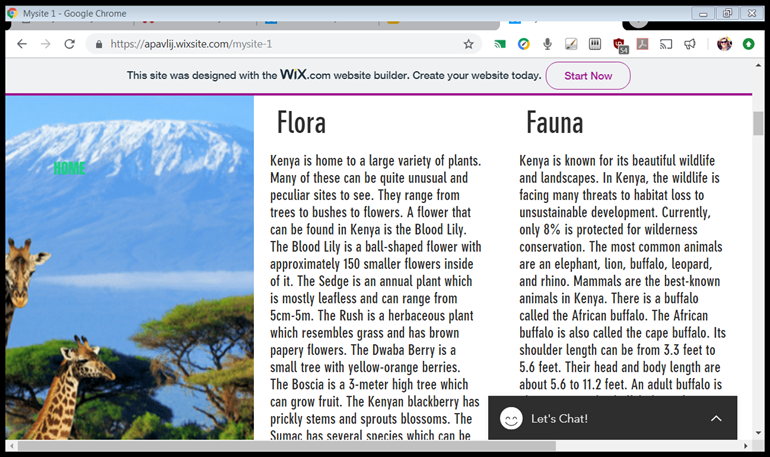
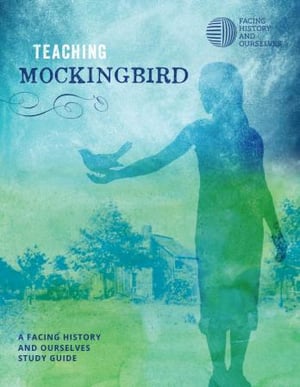 east need to belong, and how nosotros decide who does and does not, is a universal theme in many works of literature. FHAO has an incredible resource for teaching the novel To Kill a Mockingbird. Information technology uses the text equally a resource into learning virtually social justice and the ethical questions that are cornerstone to the novel. Often, this novel is used as a great character study, but this resource takes it 1 step farther and looks at the greater concepts similar race and gender. The resource (PDF) is free and electronic (get green!) although it can also exist ordered if y'all prefer a paper copy. This resource uses the text to teach about the history of lynching, Jim Crow, codeswitching, eugenics, stereotypes… the listing goes on. Information technology can work as an enrichment tool to create historical context of a novel in your classroom, or be used to build a cross-curricular program adjacent year with your schoolhouse's history section. This novel'due south full potential is tapped into with this resources and it lends itself very well to discussing current problems and legacies that we still demand to face and solve.
Topics: Culturally Responsive and Relevant Instruction, facing history pedagogy, Treaty, Facing Canada, cross curricular education and learning

Written by
Heidi Crowley works at Greyness Academy of Jewish Education in Winnipeg, Manitoba. She has been a Middle and Senior Years Social Sciences teacher for over a decade and in that time has seen her teaching practice transformed by Facing History and Ourselves. She is passionate near creating a classroom environment and activities that support the development of critical thinking and citizenship skills.
fontainepottirldind.blogspot.com
Source: https://facingcanada.facinghistory.org/6-ways-to-incorporate-cross-curricular-approaches-in-your-social-sciences-classroom
0 Response to "Cross Curricular Art Activities for Math and Science Social Studies"
Post a Comment